Twist Assist
Role: Sole Industrial Designer, Self-Initiated | Time: 3 Months / 2026 | Type: Assistive Technology / Small Appliance
The best jar opener is the one already on the counter
This is for people whose grip strength no longer meets the torque a vacuum-sealed lid requires, most often older adults and people with arthritis
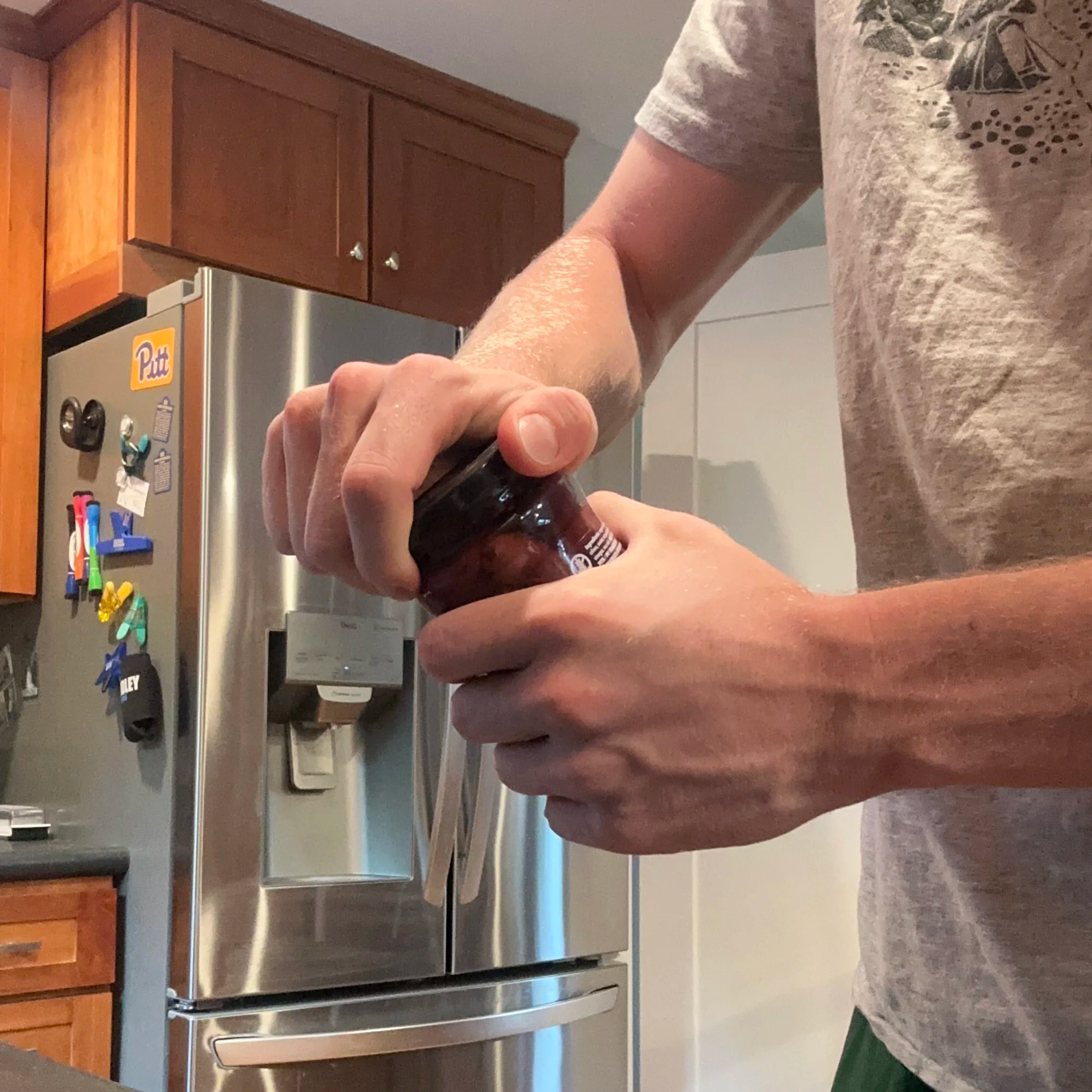
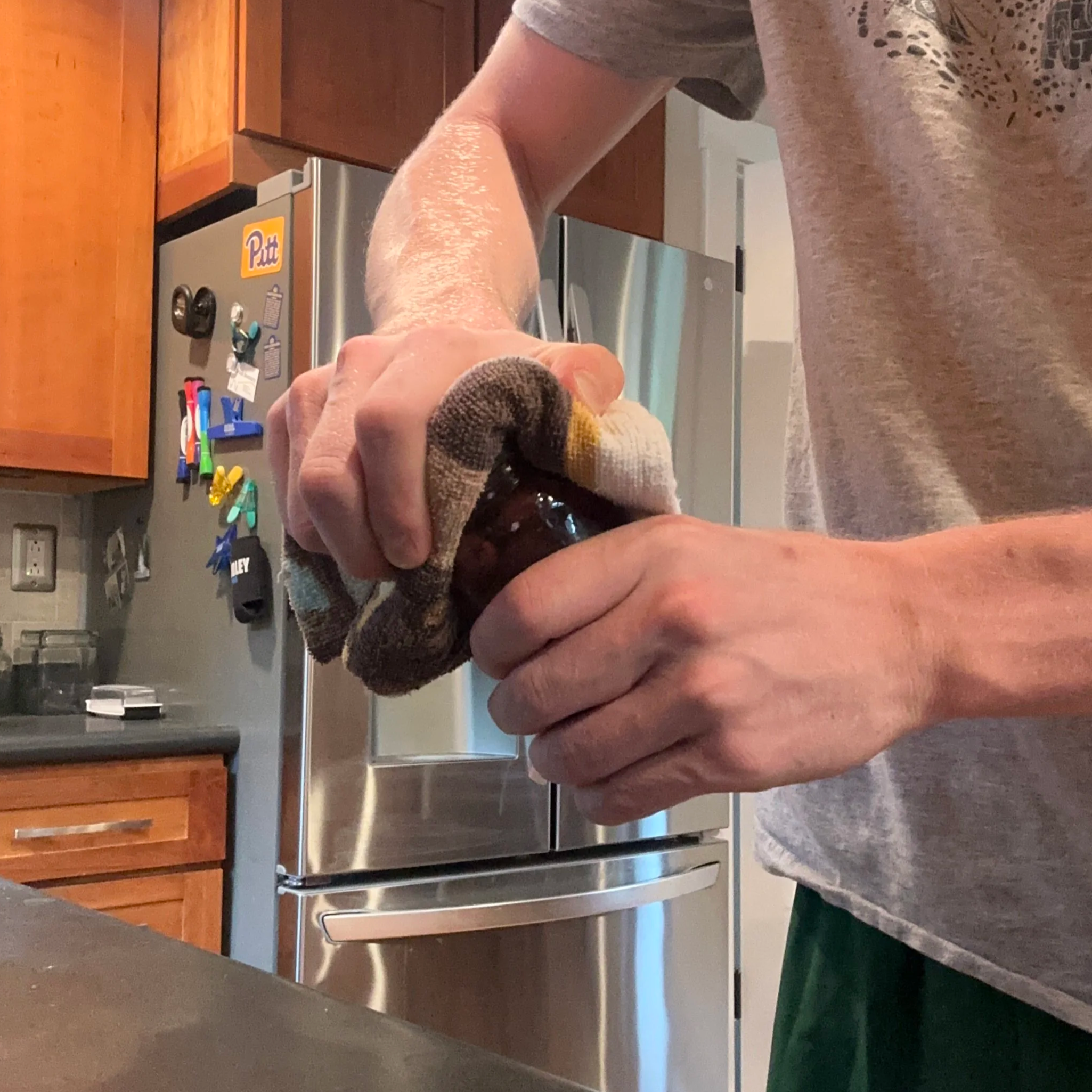
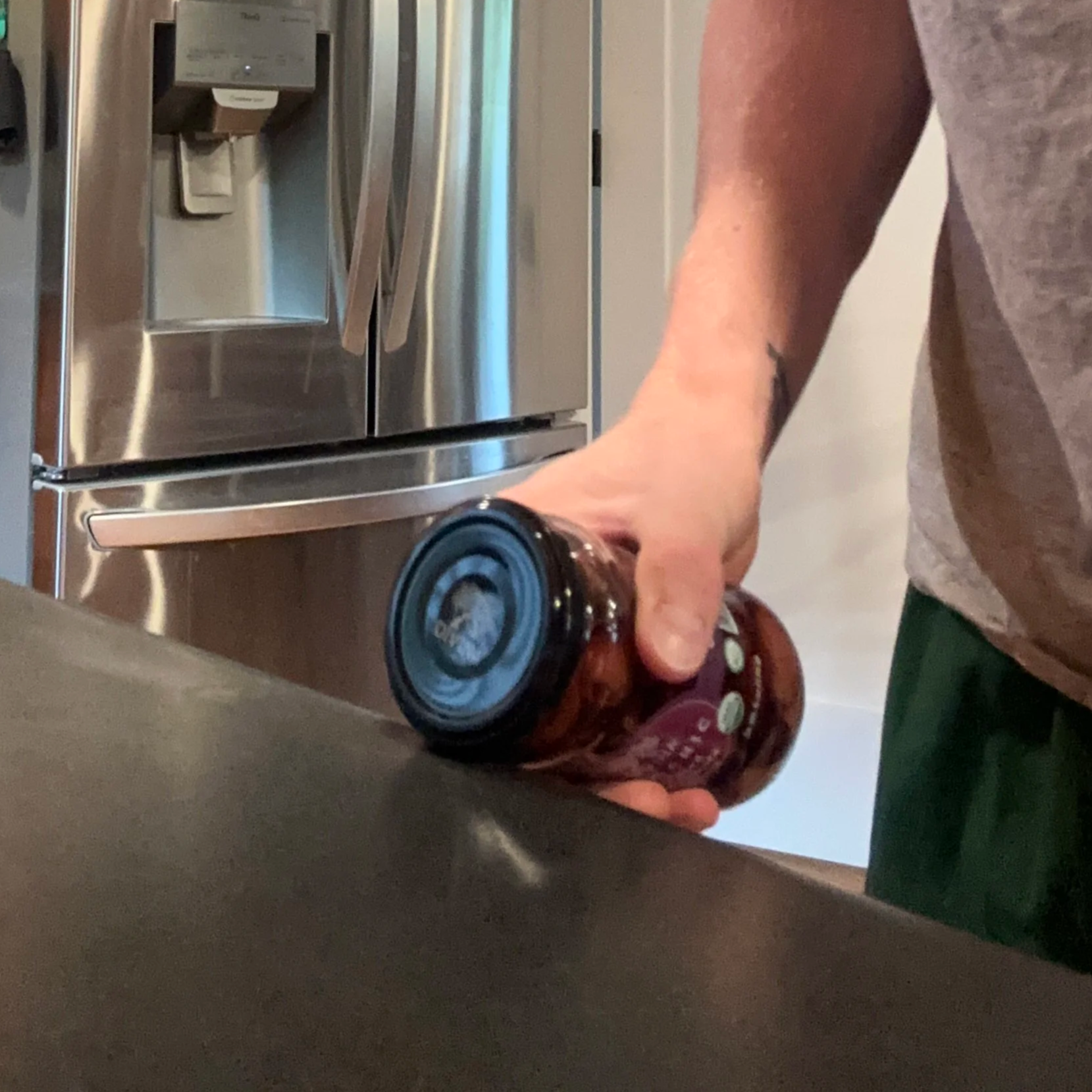
Bang it on the counter to loosen
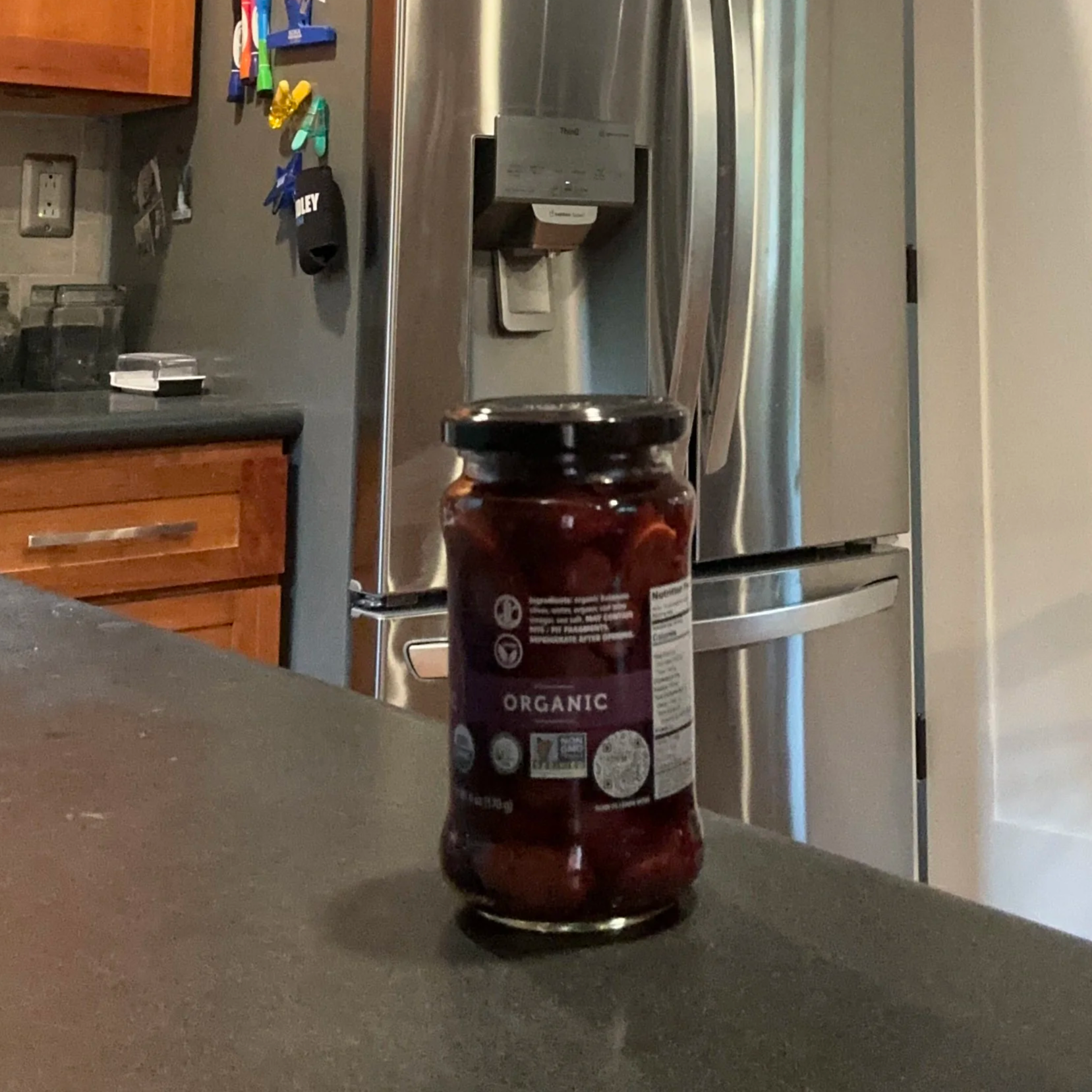
Try to open
Use cloth for better grip
Give up
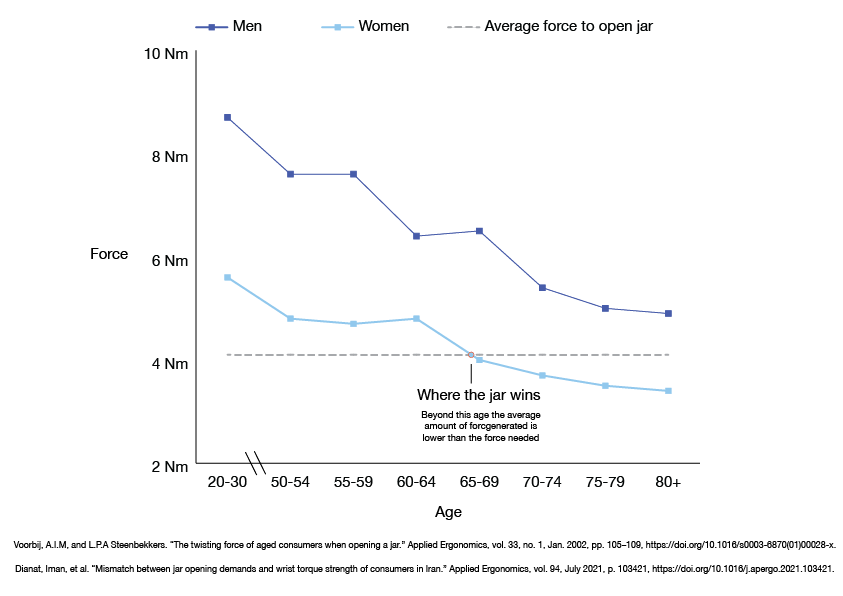
After age 50, grip strength declines by between 1-3% per year
- Wang et al., 2026
"I just can't open them anymore. I shop to intentionally avoid anything vacuum sealed."
- My grandmother, 84
21.3% of adults over 18 have diagnosed arthritis
- CDC, 2024
Jar opening gadgets have to be retrieved from a low cabinet or a high shelf, several times a day, with the same hands that can't open the jar. Because of the extra effort required for use, many of these assistive devices end up abandoned in the kitchen cabinet. One study found that 29.3% of assistive devices across categories are completely abandoned by their users. (Phillips & Zhao, 1993)
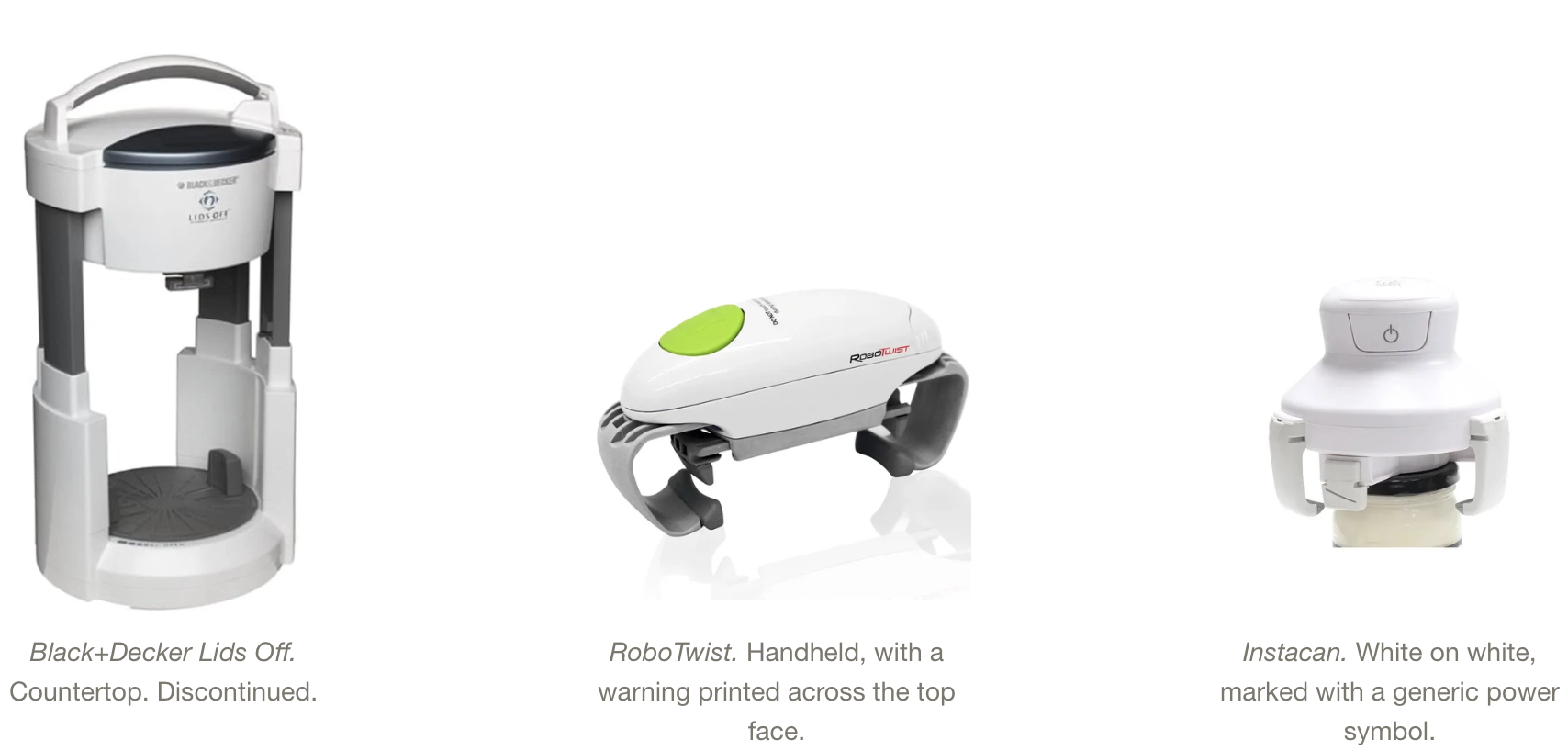
The look of these devices (glossy white finish, matte grey polymers, large power buttons) is similar to medical equipment, leading to users hiding them in drawers or cabinets. Put away in a cabinet means out of reach, out of reach means unused. The one countertop attempt in the category came with a carry handle and folded down for storage. Even its manufacturer assumed it would be put away.
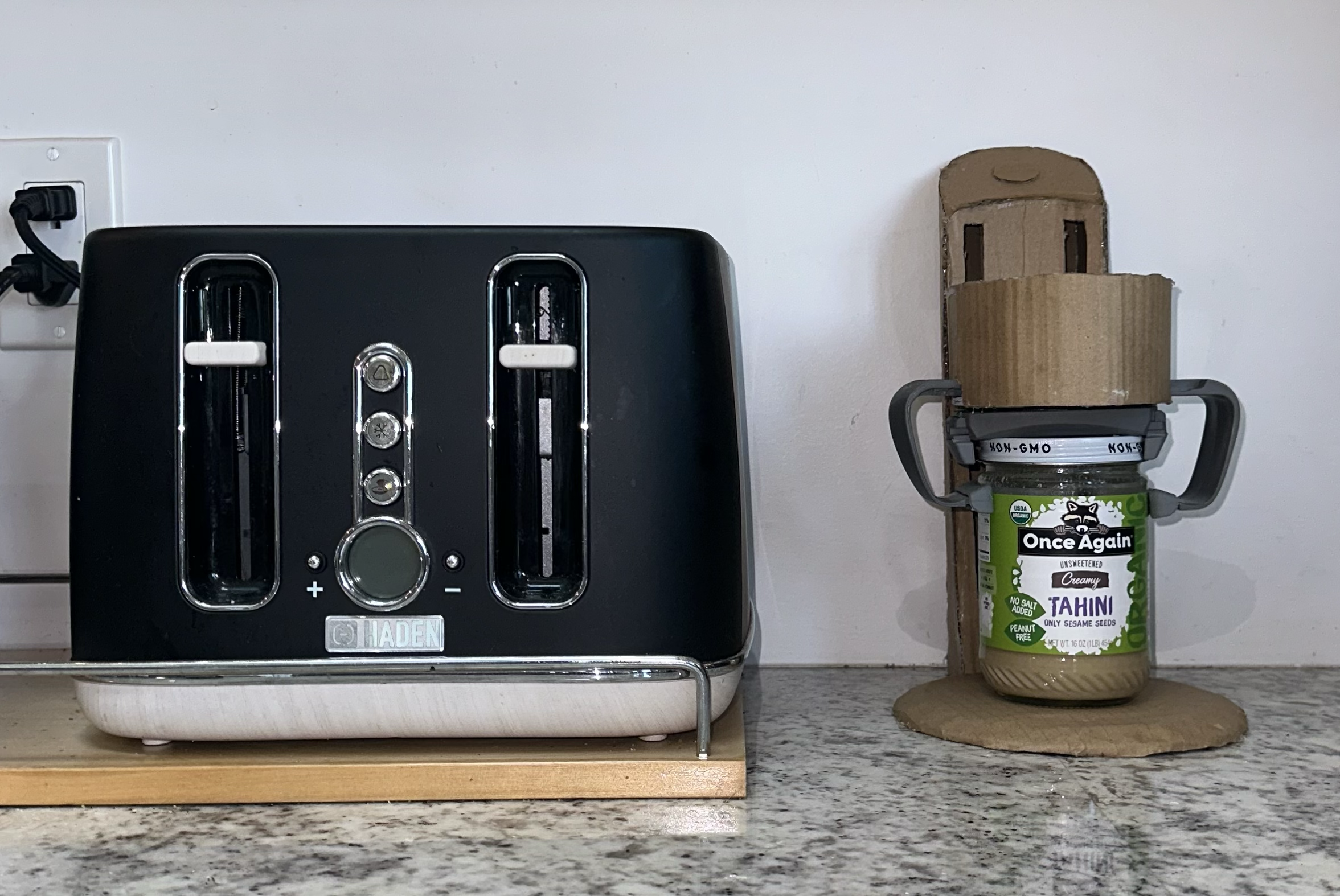
The solution to the stigma and effort that leads to abandonment of these devices is a countertop appliance that stands next to a toaster or coffee machine and doesn't get a second glance because it looks like it's supposed to be there. The functional aspects of assistive jar opening devices have already been created.
They just need housing that makes appearance the reason they get used rather than the reason they get hidden.
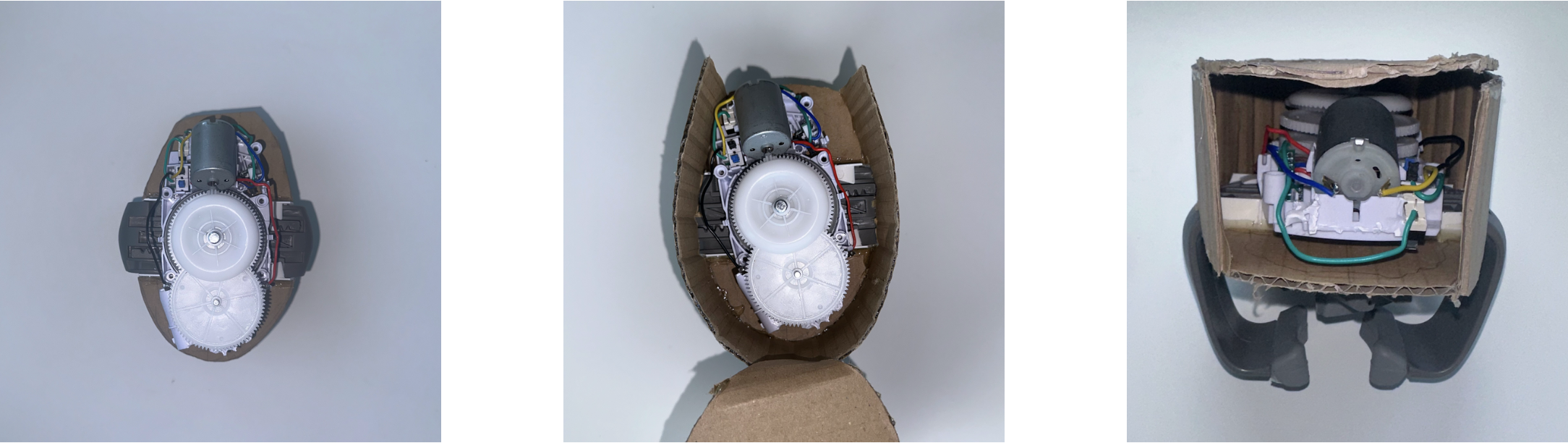
The mechanism here is not mine. I tore down a RoboTwist, kept its self-centering vice grip and gear reduction as the drivetrain for this design, and reused its gripper arms in the appearance model.
RoboTwist teardown
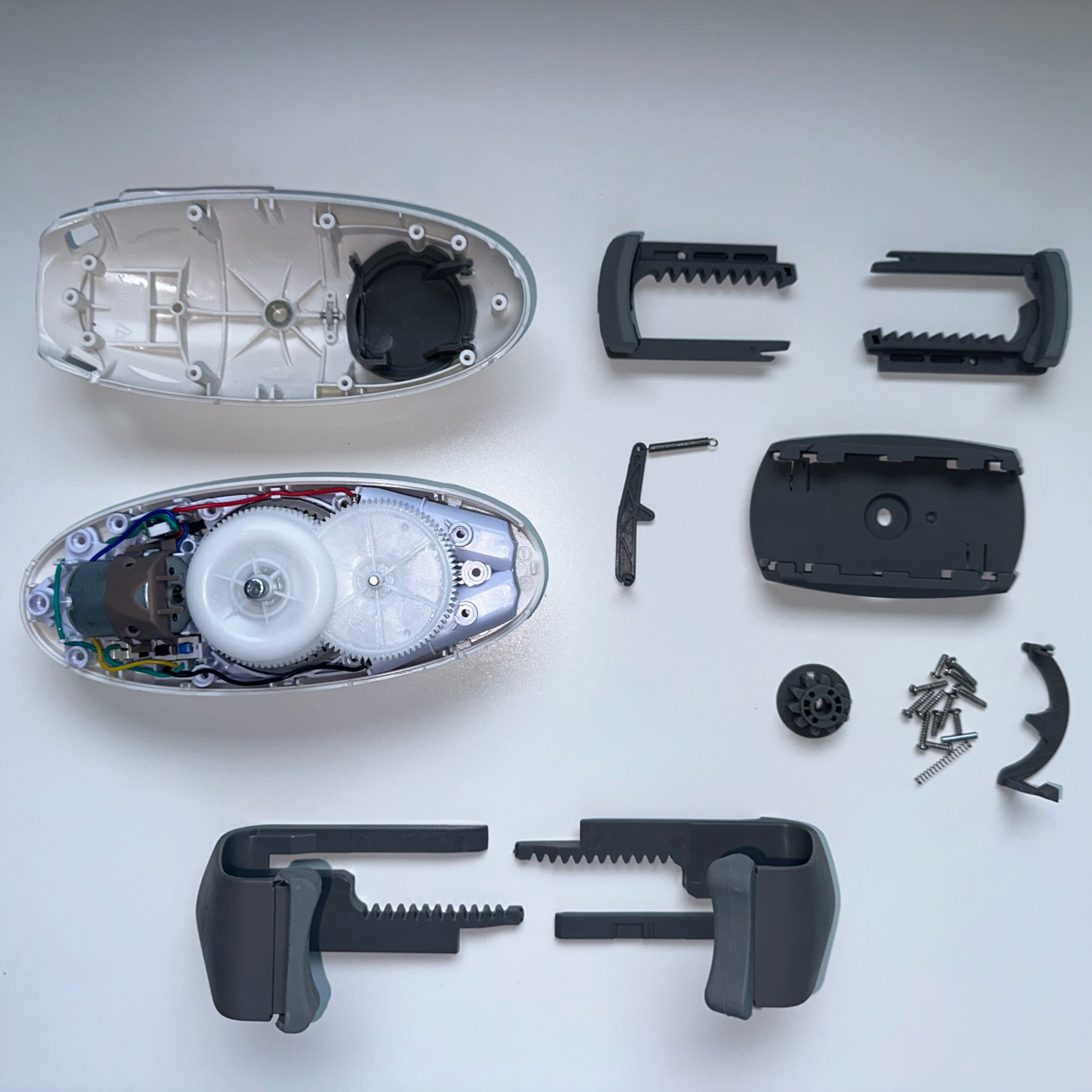
Broken down RoboTwist - drivetrain intact
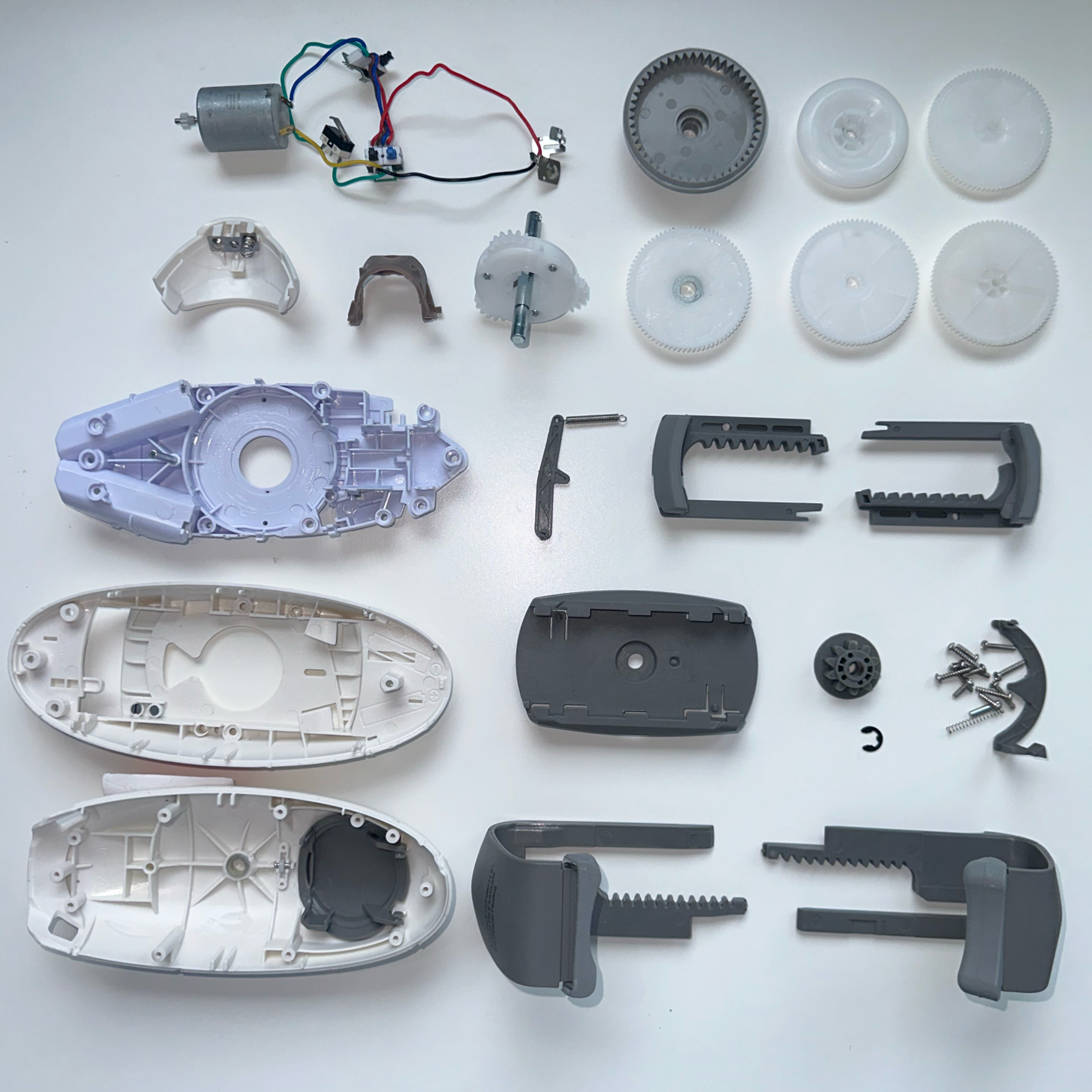
Fully broken down Robotwist
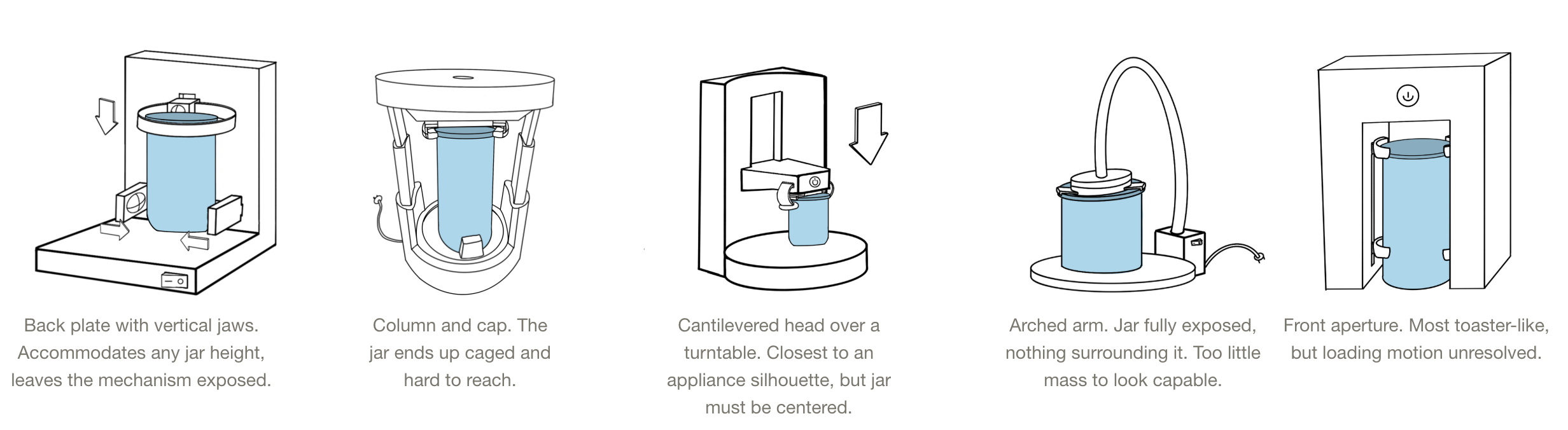
Form Exploration
Architecture
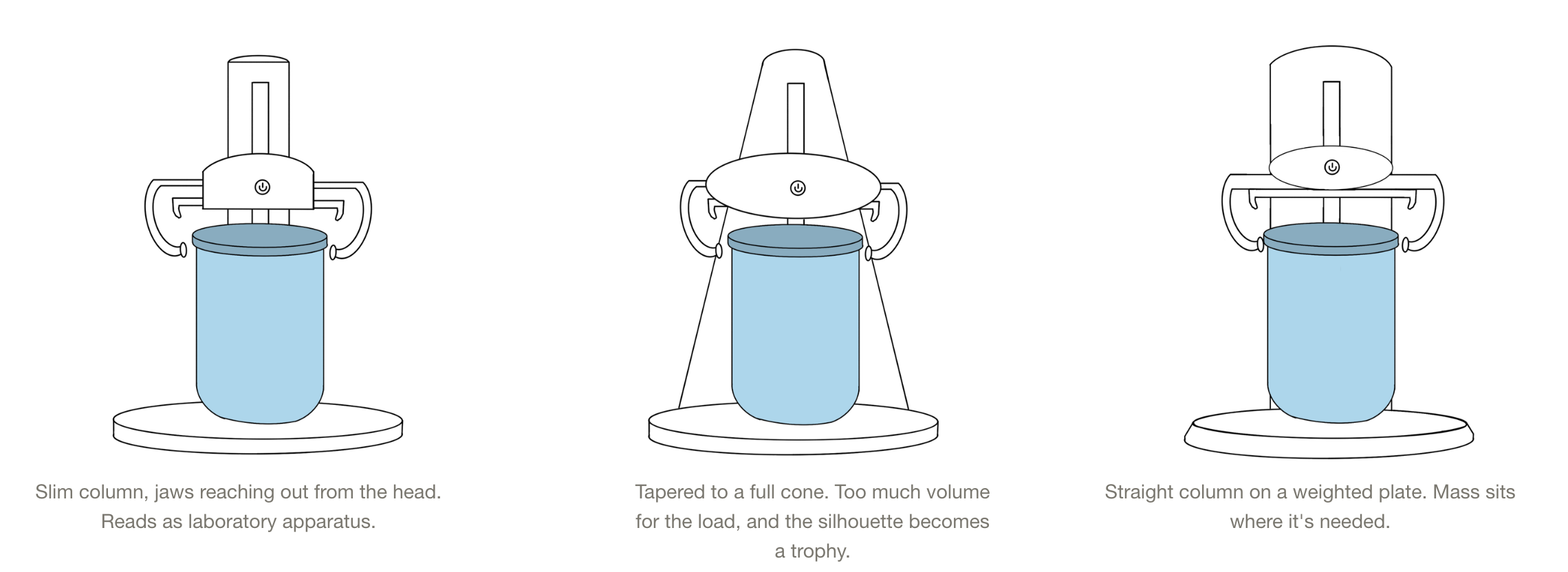
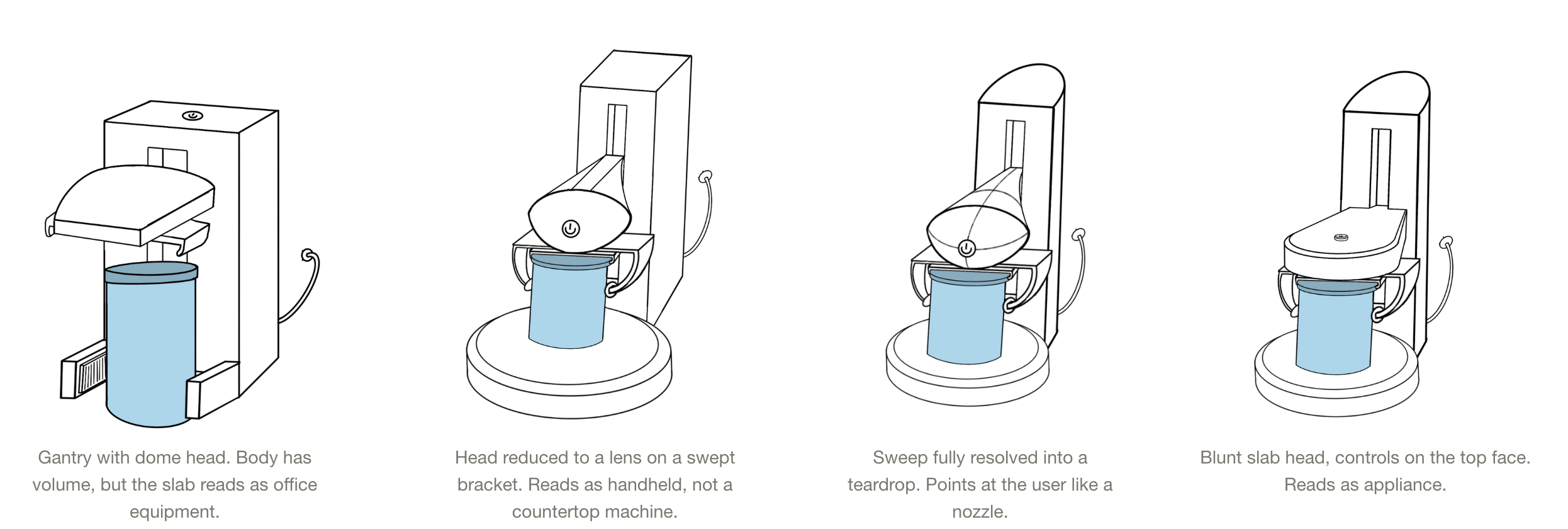
Development
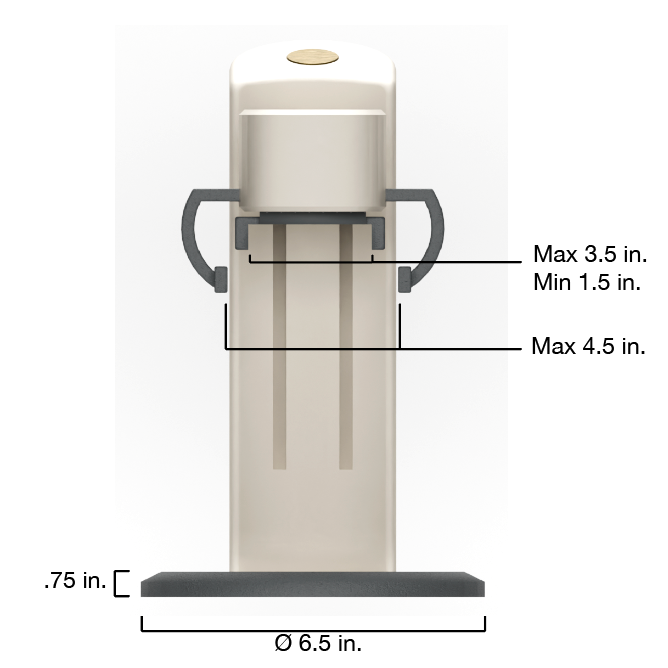
Dimensions
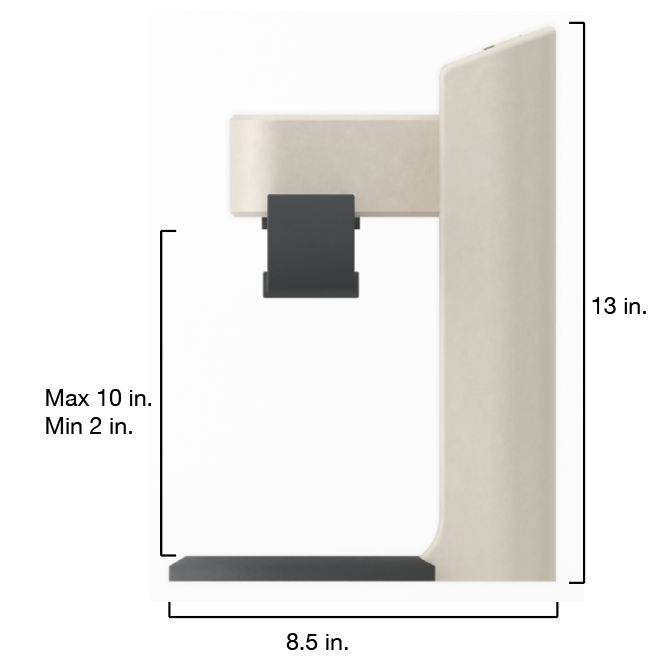
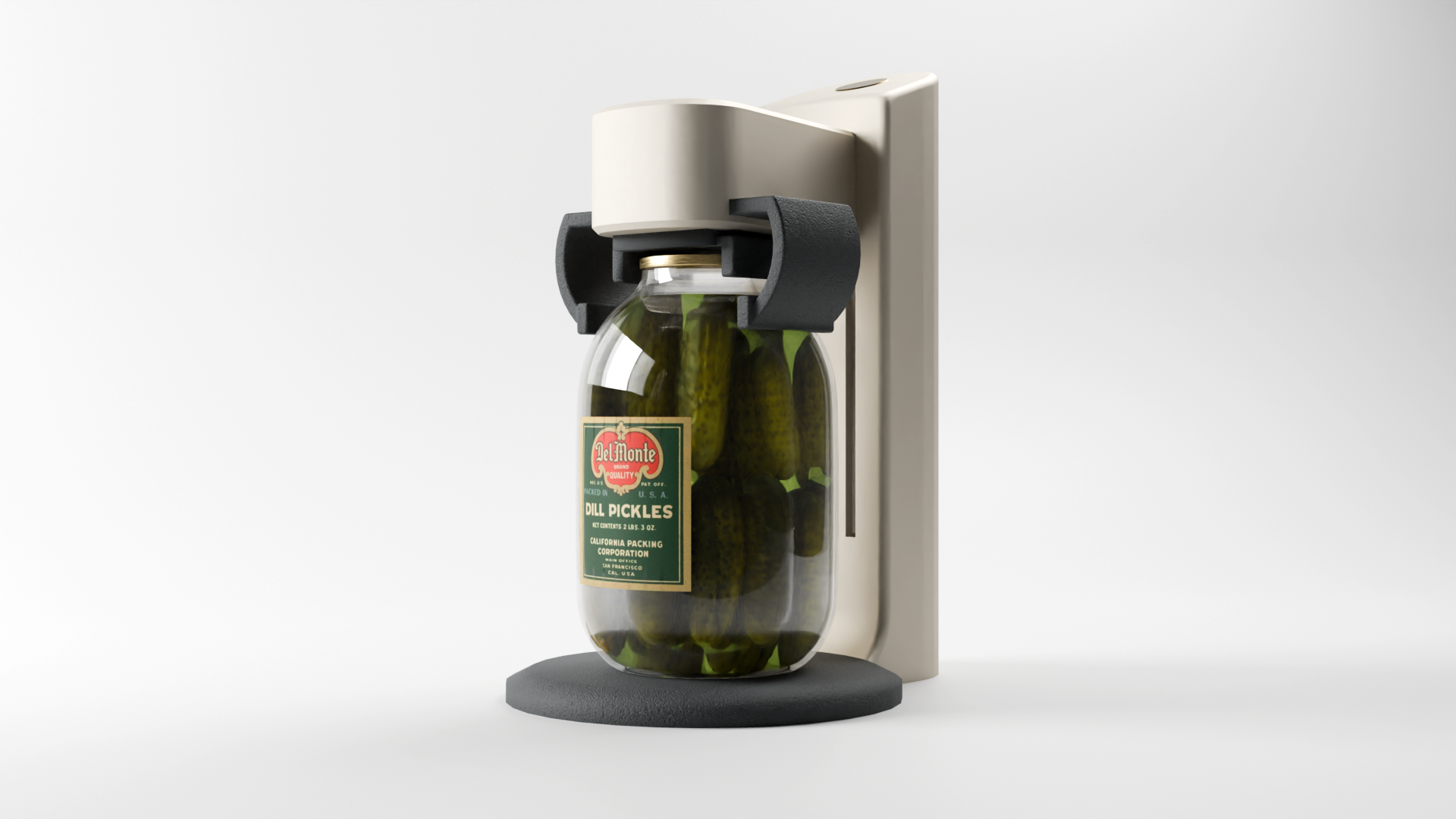
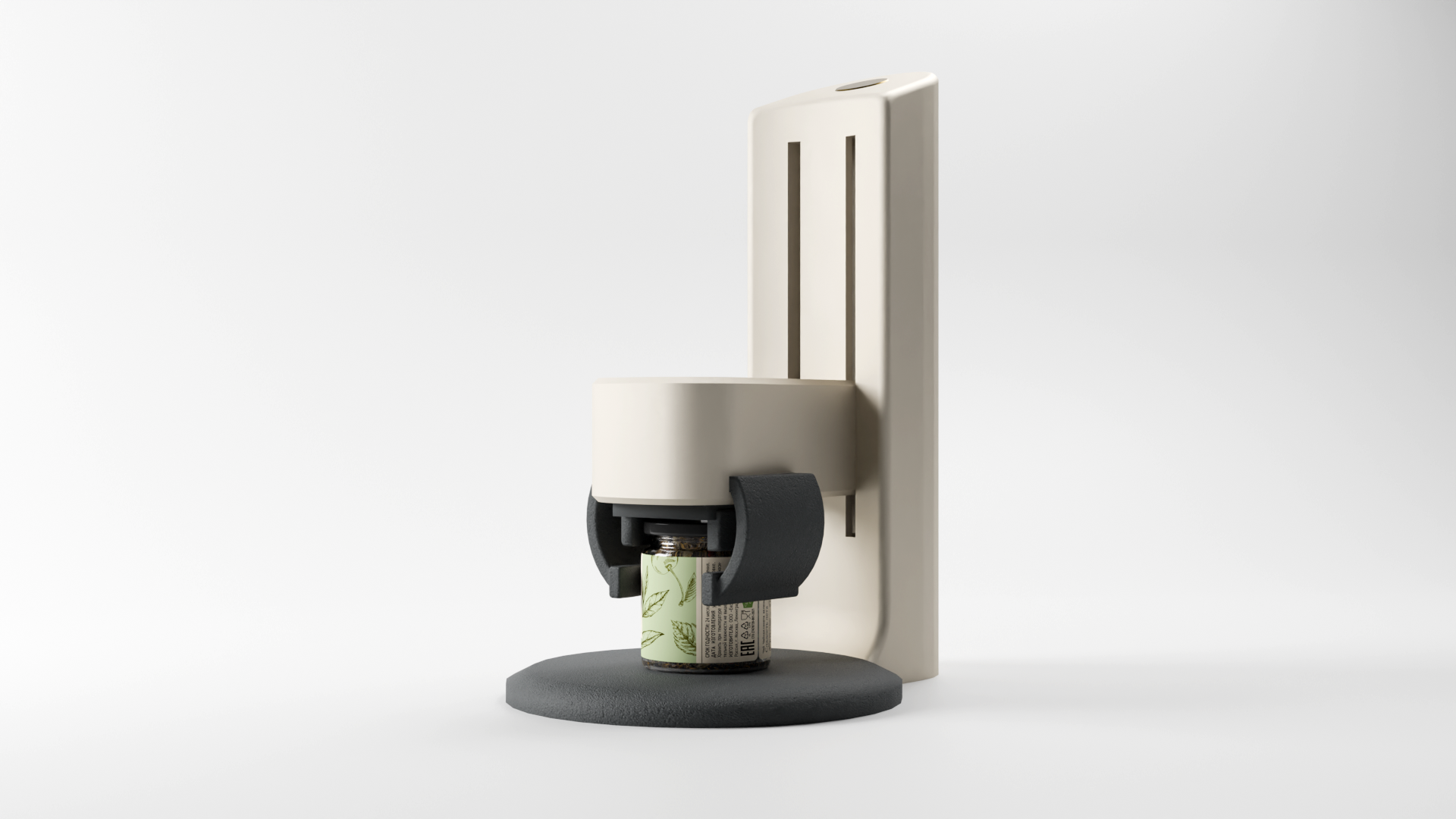
Head adjustment for various jar sizes
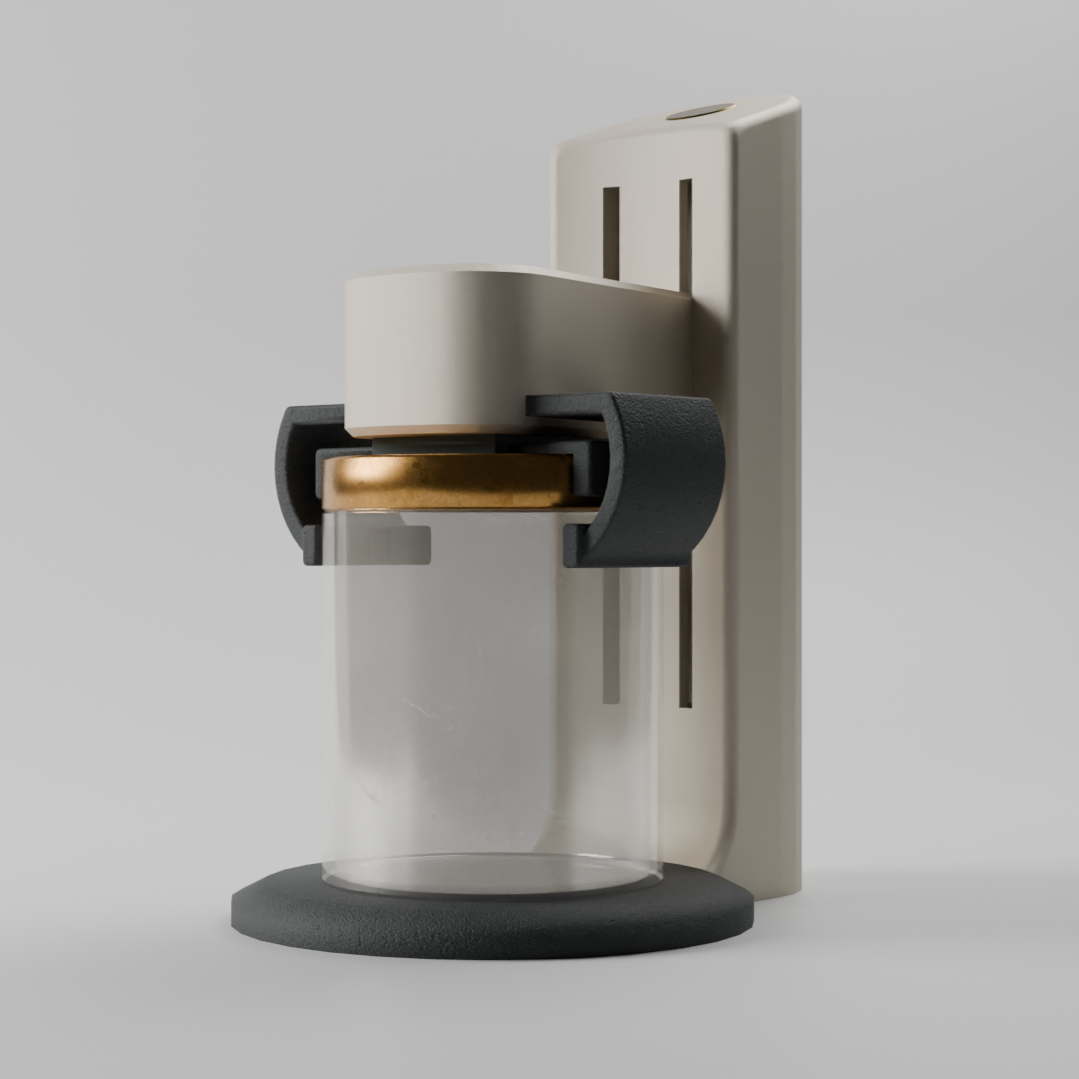
Colors, Materials, Finish
Body & head
Material - Injection molded ABS
Finish - Matte textured tool finish
Base
Material - Injection molded ABS with a 0.375 in steel ballast plate mechanically fastened into a molded pocket
Finish - Fine sandblast
Arms & grippers
Material - TPE overmolded onto gripper
Finish - Matte, slightly soft
Button
Material - Brass plated ABS
Finish - Brushed satin
Color groupings
Every surface is matte except the control
Warm off-white - Everything the user doesn’t touch during operation
Warm charcoal - Everything that touches the jar
Brass - Controls
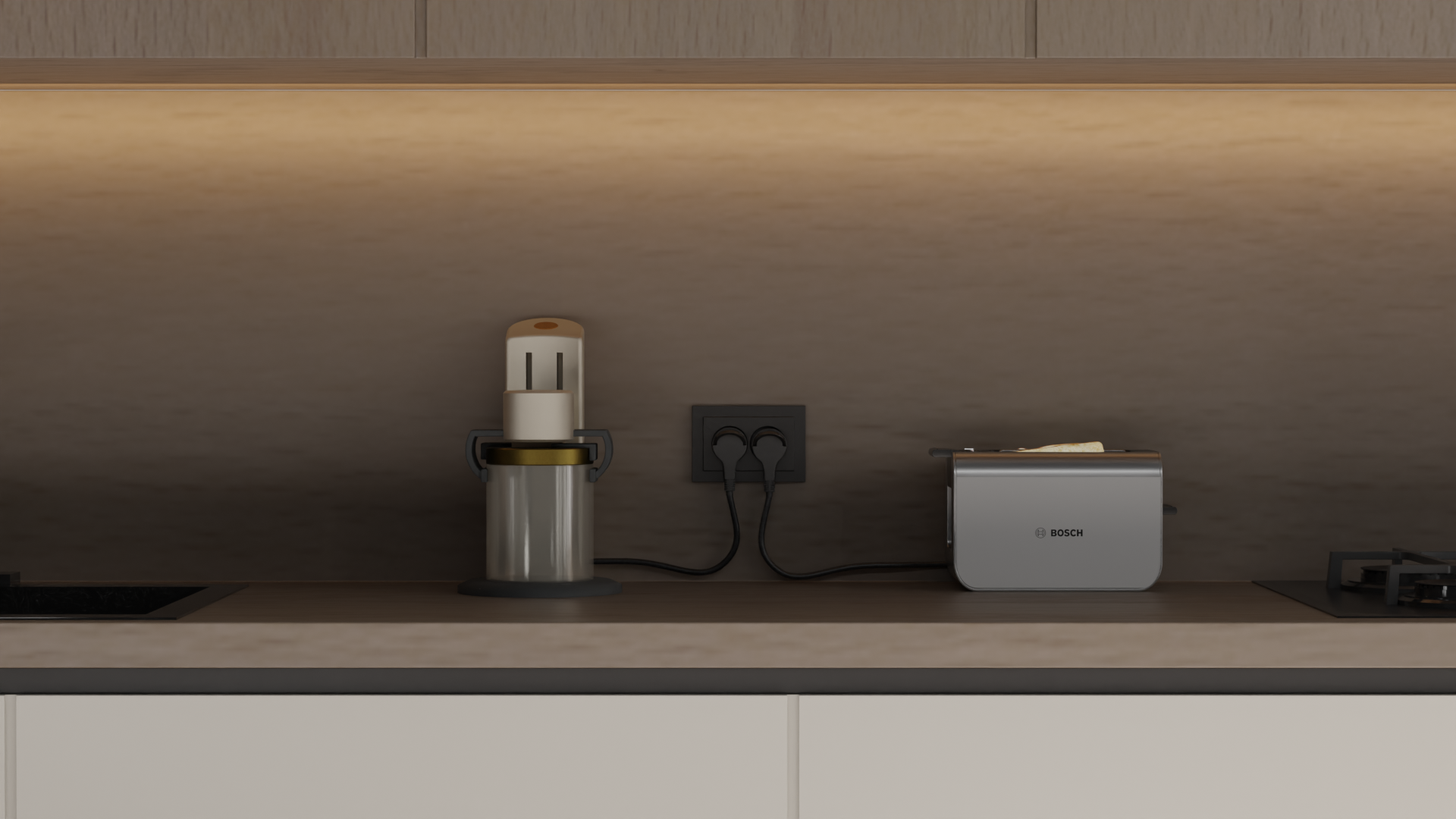

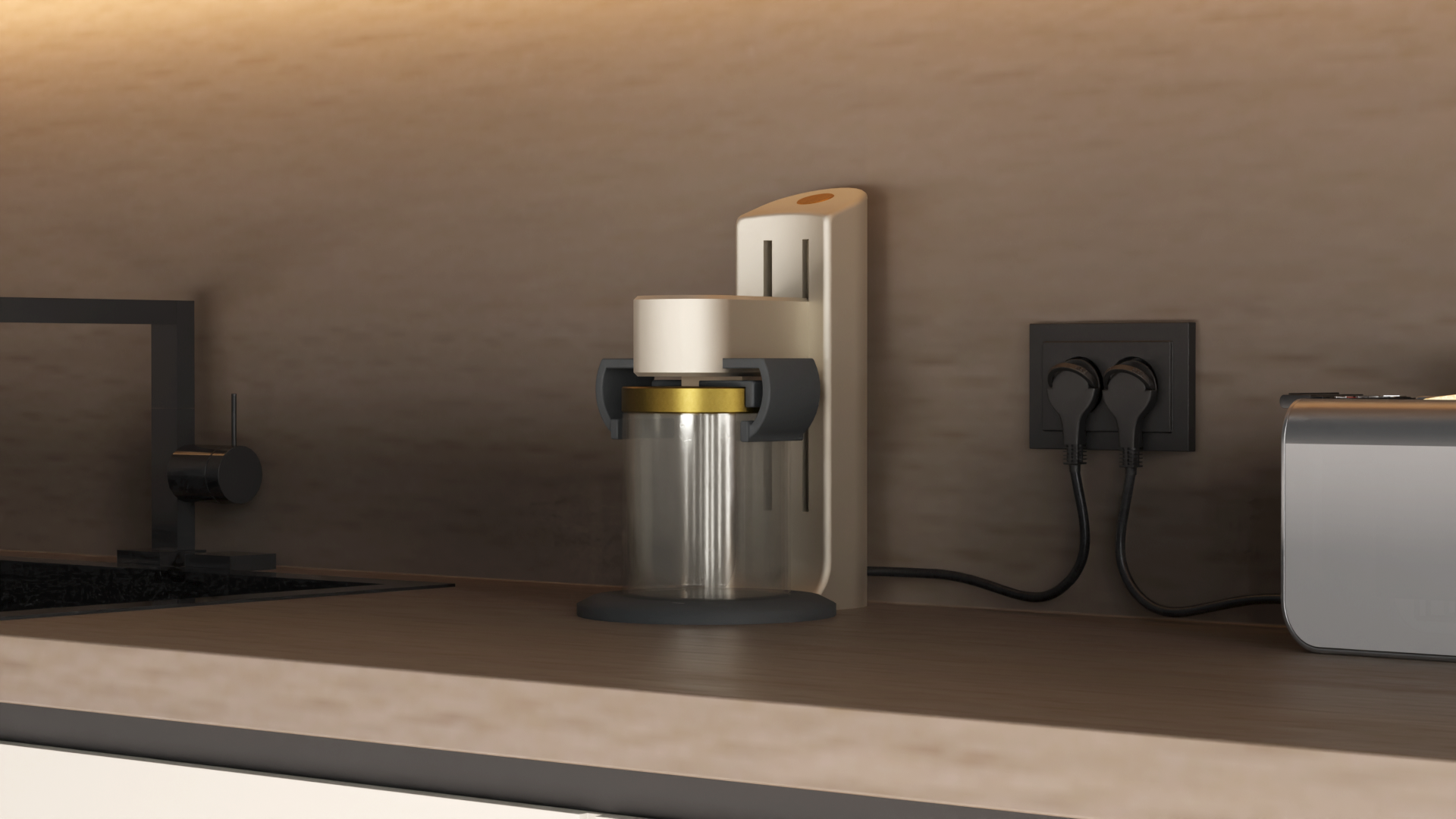
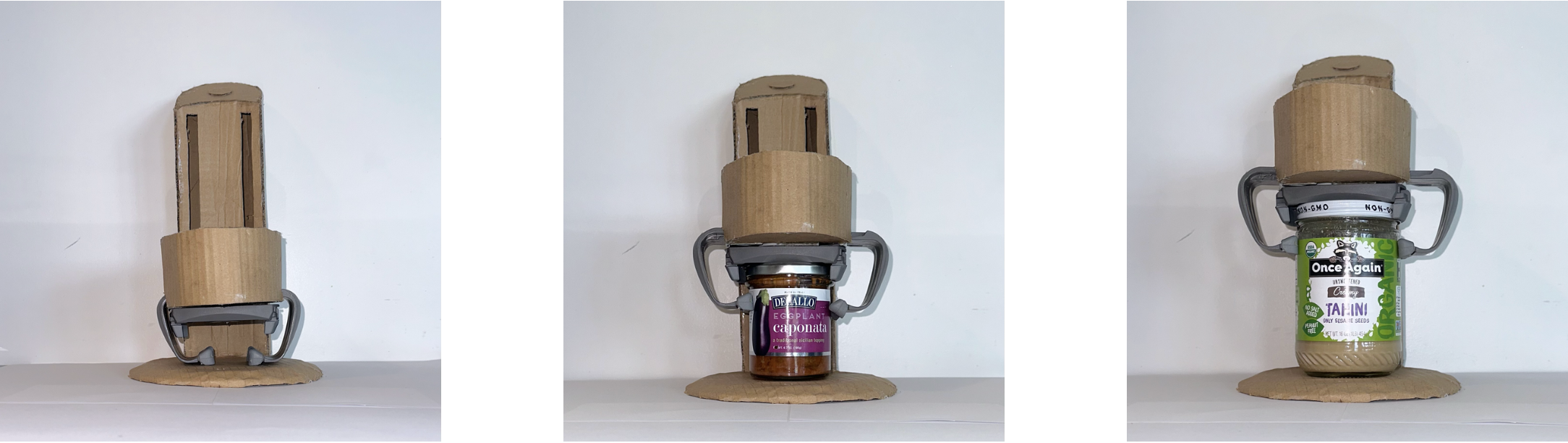
Appearance model at full scale using the salvaged gripper arms, built to check proportion, jar clearance, and counter presence.
Prototype
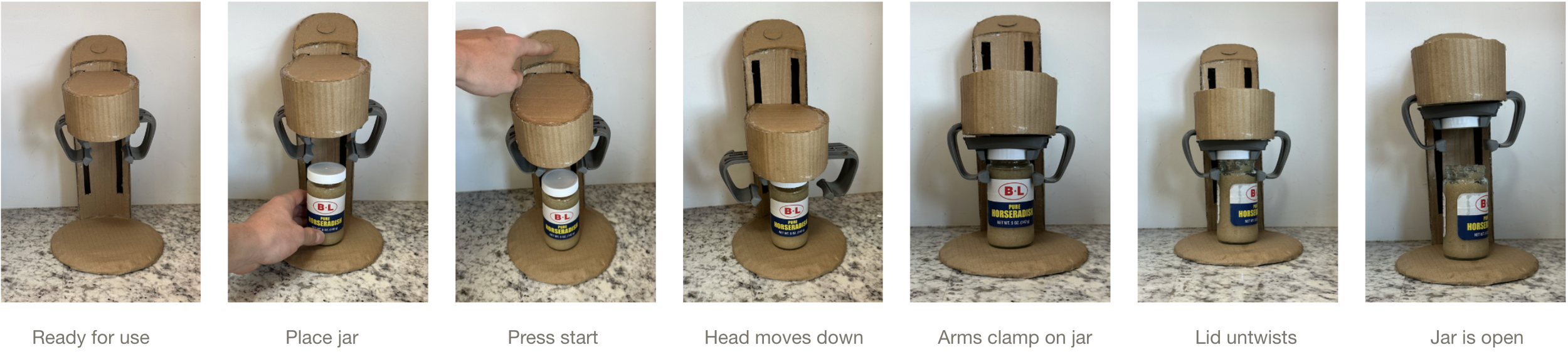
Storyboard